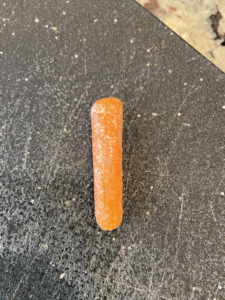
If baby carrots are a staple snack in your home, you’ve probably seen a white coating on them. What is this white stuff? Should you worry about it, or is it safe to eat?
The white coating on baby carrots is not chlorine but a natural occurrence called “carrot blush.” This thin layer of film forms due to dehydration, not contamination. Carrot blush appears when baby carrots lose moisture after exposure to air. The loss of moisture in the carrot’s outer layer causes its surface to roughen and scatter light, resulting in a whitish appearance. This white film can also develop due to damaged skin cells on the carrot.
This absence of protection makes baby carrots more susceptible to drying out, leading to the white film. But don’t worry, carrot blush is harmless and simply indicates dehydration. You can wash the carrots to remove the film or soak them in water to restore their moisture and color. Similarly, speckled or bumpy eggs in your fridge are also harmless.
Carrot blush is not a sign that your carrots are spoiling. It merely means they are dry. Eating carrots with this white film is safe. So, don’t worry about the white coating—it’s just a sign that your carrots are dehydrated.
Next time you notice that white residue on your baby carrots, you can rest assured that it’s perfectly normal and safe to eat. So go ahead and enjoy your favorite snack without any concerns. And for more on healthy snacks, be sure to check out the surprising benefits of eating carrots!