In today’s fast-paced world dominated by technology, it’s easy to lose touch with the past. However, there’s a fascinating trend emerging online: the discovery of “strange” and “unusual” objects from our ancestors’ time, often found tucked away in attics and basements, serving as reminders of days gone by.
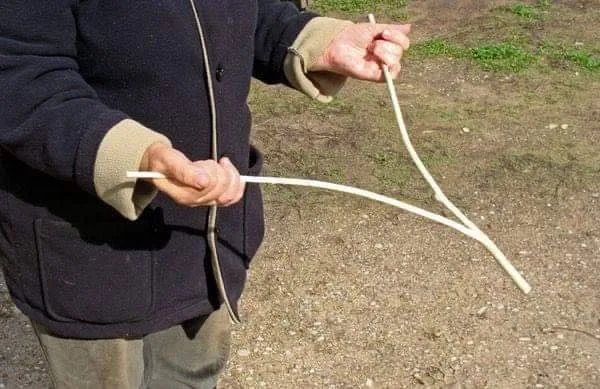
One such object recently gaining attention is a seemingly ordinary Y-shaped tree branch. Despite its appearance, this object has a rich history dating back to the 1500s. Known by various names like “Water Dowsing,” “diviner,” or “well witch,” its purpose was intriguing – to locate water!
Imagine being able to find water sources without any modern technology. That’s exactly what our ancestors did using this remarkable tool. To use it, one would hold each end of the Y-shaped stick, palms upward, with the bottom point tilted at a 45-degree angle toward the ground. As they walked, they would supposedly sense vibrations at the tip, indicating water underground.
What started as a method to find metals, dowsing evolved into a way to locate water sources, showcasing the adaptability and resourcefulness of our ancestors. It’s amazing to think about the knowledge and skills they possessed.
So next time you stumble upon an old Y-shaped branch, remember its fascinating history. Share this captivating knowledge with your loved ones on Facebook and let them discover the secrets of water dowsing. Let’s cherish and honor the wisdom of our ancestors.
Water dowsing, also known as water witching or divining, may seem like a mystical practice from a bygone era, but its history is deeply rooted in practicality and resourcefulness. The ability to locate water sources without the aid of modern technology is a skill that continues to captivate and intrigue people today.
While some may dismiss water dowsing as pseudoscience, the practice has a long and storied history dating back centuries. The use of Y-shaped branches or rods to locate underground water sources has been documented in various cultures around the world, from Europe to Africa to Asia. Despite the lack of concrete scientific evidence to support its efficacy, countless individuals swear by the accuracy of water dowsing.
The process itself is simple yet mysterious. The dowser holds the Y-shaped branch in their hands, allowing the natural vibrations of the earth to guide them towards the presence of water. As they walk over the land, the branch supposedly dips or twitches, indicating the location of a water source below the surface. It’s a practice that requires patience, intuition, and a deep connection to the natural world.
While skeptics may question the validity of water dowsing, its enduring popularity speaks to a deeper human desire to connect with the past and harness the wisdom of our ancestors. In a world dominated by technology and instant gratification, the art of water dowsing serves as a reminder of a simpler time when humans relied on their instincts and the natural world for survival.
So the next time you come across a Y-shaped branch or rod, take a moment to consider its rich history and the knowledge it represents. Share the story of water dowsing with friends and family, and perhaps even try your hand at this ancient practice. Who knows – you may just uncover a hidden talent for tapping into the mysteries of the earth.